Thursday, November 09, 2006

Empathy

The Y chromosome seems to have a gene attached to it that causes carriers of this gene to engage in, for lack of better words, “one-up-man-ship”. You've all seen it before. A group of Y chromosome carriers form together in a small group and start sharing personal stories. Each successive story is slightly more extreme than the previous. Before long the stories have grown to the point that it's obvious that at least some of the facts have been fabricated or a best, embellished. Like all carriers I've been guilty of my share of this behavior.
Several years ago I came to the realization that when I'm in this type of situation it is not important to win the discussion. I believe that since then I have been able to share the experiences of others and just enjoy them without feeling the need to search through my own experiences to find something comparable.
One area that I still find this gene showing its head is whenever I am put in a situation where I have to show empathy. A coworker of mine is going to be out for a couple weeks for some rather serious surgery. It's one of several follow up surgeries that he's had as a result of a more serious surgery when he was younger. When he shared his experience my heart and went out to him. In an effort to understand and sympathize with him that little gene started pulling up my own hospital stories and experiences. Although they fell far short of his, I shared them anyway. I was attempting to empathize with him but I feel like I ending up just coming across like just another guy trying to tell a better story. That was honestly not my intent. I have never been through anything remotely similar to what he has. My pitiful comparison was only meant for me to show that I can't even imagine how rough it must be for him. Somehow I feel like my effort came across like this, "So you had your arm sawed off. Wow! That must have hurt. I had a paper cut once and it must be at least as bad as that."
I heard a story about the Dali Lama that captured how I would like to be able to respond. He was hearing the plight of a family who was going through some immense suffering. Only a few minutes into the story he was in tears. There was nothing phony or artificial about what he was going through. He had not been through the same hardships. However, he listened so intently with all of his soul that the suffering of the family actually became his own. There was no need to find comparable events in his history that only failed to measure up. He bypassed that step and sought only to feel the same suffering that they did. He succeeded.
Since hearing this story I have tried to follow his model. I fear that my attempts are failing. I will keep on trying to suppress my genetic need to find historical corollaries and hopefully move toward true empathy.
I believe the secret is love. Once I learn to truly love my fellow man I will be able to fully share their joy as well as their sufferings without having to create artificial links to my own experiences. For now, I will keep working at it. My real prayer is that the suffering of those I love will just cease. I will gladly share their burdens if necessary, but I look forward to sharing their joy as well.

Wednesday, November 08, 2006

No Shortcuts to the Top


Just for a change of pace I decided to read a book about a personal hero of mine. No Shortcuts to the Top by Ed Viesturs and David Roberts is the story of Ed Viesturs' mountianeering accomplishments. He recently became one of only a handful of people to to summit all 14 peaks over 8000 meters. Ed is famous for his commitment to safety and making sure that he returns home from every trip regardless of wheither or not he summits. Ed was the star of the Everest IMAX movie and also assisted in the rescue of many members of the ill-fated parties of the 1996 expeditions to Everest. Ed's motto seems to be similar to my own, "The summit is optional. Returning to base camp is a neccesity." In spite of this ideal, or perhaps because of it, Ed has become the most successful mountianeer of recent years.

Tuesday, November 07, 2006

The Language of God

I just finished reading The Language of God: A Scientist Presents Evidence for Belief by Francis S. Collins. I was rather disappointed with this book. Perhaps it was because it did not even come close to living up to its subtitle. Although I enjoyed the history refresher and the personal account of the author's "search for truth" this book presented no compelling evidence for belief.
Francis Collins has written a good book detailing the currently accepted scientific origin theories, the big bang and evolution. He then goes into great detail into his work on the human genome project. These chapters convince the reader that Collins deeply believes in the evidence that DNA and evolution are facts. Where the book falls short is when Collins is guilty of the "God of the Gaps" fallacy in order to prove his beliefs. That is that whenever we reach a point when we don't understand something we just attribute that act to God. Collin's contradicts himself by explaining how large, complex and mostly unexplored the human genome is and then claiming that certain things like the moral law and altruism cannot be explained by DNA alone. How can a scientist admit that something is unexplored and then a few paragraphs later assert what those unexplored parts can or can't do?
Collins later explains many of the historical conflicts between science and theology. This section is a pretty good review of these conflicts without getting too bogged down in specifics. I enjoyed these chapters however they offered nothing to support his stated purpose of the book and in most cases they painted theism in a very bad light.
In the early chapters Collins describes how a preacher introduced him to the writings of C. S. Lewis. After reading "Mere Christianity" For the first few chapters Collins quoted Lewis on nearly every page. There are several other theologians and philosophers who have spoken at length about the moral law. It would have been nice if Collins could have referenced any one of them rather than relying solely on Lewis.
Collins accepts on faith the existence of a moral law. This is another place where he gets into a logical feedback loop. Collins believes, like Lewis and many others, that the very existence of good and evil, right and wrong, morality and immorality cannot be explained by nature. Since it can't be explained by nature then it most be caused by something outside of nature, God. Good exist because god created it, so if there is good there is god. Collins does not address the possibility that this premise may be flawed. In his mind morality itself is evidence of god. Morality simply cannot exist without god. I don't accept this premise so I had a very hard time with his later "proofs" since all of them were based on it.
Collins also misused Occam's Razor. In nearly every chapter he prefaced a conclusion with, "If you are willing to accept the existence of a God then...". With this preface to every conclusion his beliefs always seemed to be the simpler solution to the problem. But, remove this qualifier and Collins' conclusions loose their bite.
I think one of the problems is that Collins is very good at playing the Devil's advocate when he's explaining the opposing views since he actually held and embraced those views for decades. Unfortunately for the sake of his conclusion, he makes that case better than he makes one he intended to.
At the end Collins tries to make his beliefs line up with Christianity and discusses many issues in bioethics. I found these chapters enjoyable but they hardly supported his thesis.
I'd recommend this book to anyone who is interested in getting their feet wet on this issue but, contrary to the subtitle, there is nothing in it that could actually be called "evidence for belief."

Friday, October 27, 2006

It's not All Christmas and Birthday Parties

A few months ago I was looking through a photo book of an extended family member's. The pictures were cute and there were a lot of them. The shots included Boy Scout camping trips, bridal showers, weddings, baby showers, birthday parties and Christmas parties. All good stuff. After looking through the photos I felt like something was missing. I didn't feel like I knew the people in the pictures any better at all. There were even a few pictures of me in these shots and I didn't even recognize myself at first. For some reason I felt this weird disassociation with the people in the pictures.
I brought this up to my wife and we discussed it for a little bit. I finally came to the conclusion that the photos were just the good times when they wanted to take a picture of the events in their lives. The lack of any bad news in any of the pictures made the people in the photos seem as two-dimensional as the prints themselves. I don't blame anybody for not stopping to take pictures of all the bad stuff in their lives. It'd be even more disconcerting to look through a scrapbook of only funerals, divorce pictures, car accidents, and illnesses. But would it really be so bad we did take a few of those pictures? Wouldn't it leave a better record of who we really are if we recorded a few of the tears as well as the smiles?
Along this line my wife has fallen victim to a new hobby. She's gone headfirst into digital scrapbooking. And she's so good at it that I'll finance it 'til her heart's content. Sometimes she'll just take one simple picture and doll it up with fancy papers and cutouts. I've seen many other scrapbook layouts before but Victoria's are unique. Like real life she is never content to just put a caption on a picture she has to give you a paragraph or two about the subject. She incorporates this journaling into every layout she does. I don't know if it was because of our discussion or not but she has also started scrapbooking a few of the tears in our life as well.
Last month Noah, my third, had to have a breathing treatment. He gets croup every year and his little lungs just have a real hard time fighting it off. Victoria took a few shots of Noah on his breathing machine. The next day she had made a scrapbook layout complete with journaling of the event and she's posted it to her blog. Far from being negative, I think this layout shows that Noah will struggle through adversity and tough it out no matter what life throws at him. I love all of Victoria's layouts but this one really had depth to it.
I'm going to make a better effort to take pictures of the bumps and bruises, the accidents and the goofs. Not to dwell on them but to learn from them and to help others if possible. Life isn't all birthday parties and Christmas presents. By sharing and documenting the not-so-happy times we can add tremendous depth to the history that we are leaving behind for friends and family. Through this they can come to love and understand us even more.


For a large collection of her layouts please visit Victoria's blog.

Wednesday, October 25, 2006

Church Ball and the Death of Mormon Cinema

If a producer were deliberately trying to make a movie that showed the worst aspects of LDS culture yet stay as far away from any doctrinal issues as possible I don't think they could do much better than Church Ball, the latest release from Halestorm pictures. It appears that Halestorm has gone to extremes to avoid doctrinal issues and focus solely on the social club distinctions instead.
Here is a quick plot summary: The church leadership have decided to cancel church basketball programs because they are counter productive to the gospel. An overzealous Bishop "calls" one of the players, played by Andrew Wilson, to bring the final church basketball trophy home to his congregation. (Note the use of the word congregation rather than Ward. This is just one of many instances in the movie of avoiding LDS specific terms.) Realizing that his team is a bunch of misfits, Wilson goes on a search for a ringer. They find their ringer by reactivating a member who actually fell away because of an incident that happened during a church basketball game. Well to make a long story short they win the game against their rival congregation and they get the trophy. Then at the very end when church basketball has been banned they show the same lousy behavior during a church baseball game.
What disturbed me most about this movie was that nobody seemed to learn anything. Even the leaders in the movie recognized that the players’ behavior was an embarrassment to the church. At one point the players were shown asking what the minimum standards were to be able to play. "Now they don't have to be members. They just have to come to church once in order to play." They actually stated that attending services was not their goal! After the team scored a rare victory one unlikely player, played by Gary Coleman, says, "Alright everybody! Beer is on me!" They make light of this comment but to me it’s just another example that winning was their only goal. They hadn't even given the most cursory briefing of LDS doctrines to these players.
Another scene shows a member player who has a foul mouth putting $20 into his curse jar before he gets dressed for the big game. He was actually planning ahead for his bad behavior rather than taking steps to correct it.
This story line had some potential but they completely blew it. Had they realized that other things were more important than basketball and done something like forfeiting the final game for one of those more important things I could have forgiven every other defect in the movie. However, this move never had any such learning moment or point of awareness.
The deliberate dilution of LDS lingo in the movie was completely unnecessary. The prayer that they showed was arrogant and did not close in the name of Jesus Christ. Come to think of it I don't think the words Jesus Christ showed up even once. I don’t even think they ever used the word Mormon. I’m not going to watch it again just to find out. Perhaps this was to imply that similar problems may happen in other denominations’ sports programs too. Or perhaps this was deliberate to avoid associating this flick with anything actually divine.
Besides a few cute one liners this movie had nothing redeeming about it.
As I've stated before on other posts, I grow more disappointed with this entire genre' with every release. This movie just continues that trend. When, if ever, will Mormon cinema even approach its stated goal of making a movie that shows LDS values and culture in the same way that "Fiddler on the Roof" did for Judaism? Richard Ducher, the producer of God's Army and Brigham City asked in an interview "What kind of a movie would [Fiddler on the Roof] be without the Jewishness? He argued forcefully that just like Fiddler on the Roof, we cannot make profound Mormon movies without including Mormon culture.
Personally, I’m patiently waiting for that movie, but from what I've seen so far I seriously doubt it'll come from Halestorm.

Monday, October 23, 2006

The Watchmaker

A coworker sent me a link to a little video called the Watchmaker. Please take a minute to view it. click here
As you know from previous posts I am not a fan of trying to prove God exists. I sent the following reply:

Dear coworker,
This video relies on one simple logical premise. The existence of a watch requires the existence of a watchmaker. We are thereafter asked to accept the premise that all complex systems require a designer.
Let us follow this logic out one more step. This watchmaker seems like a pretty complex entity. Using this same logical premise and no other I ask just one question.
Who made the watchmaker?
His response was that God did not require a creator for the simple fact that he was God. So the logical discussion that he started was quickly turned into a faith discussion as soon as the logic no longer worked in his favor. I attempted to point out the paradox that he was asking me to accept. My belief is simply to stop trying to make the two completely harmonious. By definition my faith should not and can not be proven without it becoming someting else besides faith.

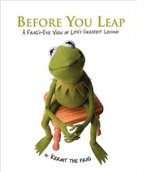
At my brother's suggestion I have also started reading a book on intellegent design. The Language of God: A Scientist Presents Evidence for Belief by Francis S. Collins. I hope that this book will not fall into the same logical pitfalls and traps that plauge most essays on ID. The author started out as an atheist until his work on the Human Genome Project presented several "evidences" of a creator. I still haven't finished reading what Kermit has to say so It may be a little bit before I can finish this book. I'm really enjoying Before You Leap.

Saturday, October 21, 2006

I finished reading The End of Faith today. This was both a very depressing and highly thought provoking book. Over 100 pages of the book go into great detail about the millennia of atrocities committed in the name of religion. I had to really struggle to get through this section because it was colossally depressing.
The next chapters dealt with the subtle and not so subtle impact that religion has on our political system. No surprises here. I’ve always been disturbed by administrations that try to push the limits of the establishment clause and the unholy alliance of the Republican party and the Christian Coalition has given me special cause for alarm.
Although I have a hard time with Harris’s conclusions that it is time for the world to abandon religion completely in favor of reason and logic, I can find no flaws with his logic or his evidence.
One of the reasons we continue to cling to religion is that most people philosophically believe that the only source of morality is divine. Right and wrong cannot exist without a god. I have always felt that this is not the truth. I have seen personally, and this book has illustrated many instances where religious people have behaved immorally and also instances where non-theistic people have behaved morally.
The book was not a pleasant read but, its lessons will not be easily forgotten.

On a much more uplifting note I have just begun reading a more lighthearted book about improving myself and learning how to find a happier life. The book is an autobiography of sorts about the life of a longtime entertainer whom I have admired since I was a young child. I have always felt a spiritual bond with the author and I look forward to taking the advice of Chapter 11 and “Finding [my] Inner Tadpole” The book is Before You Leap: A Frog’s-Eye View of Life’s Greatest Lessons by Kermit the Frog.

"You must look deep inside your heart and ask what you really want. If your immediate answer is 'dessert,' you probably missed your heart and went directly to your stomach." p.76

Thursday, October 12, 2006

Stone Soup

I've always enjoyed the Russian story about stone soup. A group of soldiers passing through town are able to create a miracle. They are able to convince an entire town to cooperate in making a meal to serve a large group. All in the group were feed with a meal that they previously didn't believe they had.
The similarities here to Christ's miracle of the loaves and the fishes are very striking to me. In both stories food miraculously appears out of nowhere. In the case of the stone soup it was just a case of people softening their hearts and looking into their cupboard to share with the rest of the town. In the traditionally interpreted sense Christ's miracle was just magically expanding fish and bread that kept on feeding the multitude. What if this too was more of a human miracle like the stone soup? Would it take away from Christ's accomplishment if the true story was that people simply softened their hearts and shared what they had with the group? On the contrary I believe that it would be more miraculous. I have always felt that the greatest stories of Christ were found in what he inspired others to do. It is not my intention to belittle his miracles. Rather, I believe that the miracles that change the hearts of others are much harder and ultimately more important than the more physical miracles. Magically growing bread and fish is less impressive to me than eliminating selfishness from a multitude of people.

The End of Faith

Along the same theme that I seem to fall back on frequently; that being science, politics and religion, I just started reading a new book this week. The End of Faith: Religion, Terror and the Future of Reason by Sam Harris. Harris is a secular humanist. As such he believes that morality is a natural human trait and therefore not necessarily linked to religion. Harris takes this a step farther and believes that any religious person that claims to worship "The one true God" cannot justify religious tolerance of any kind. "certainty about the next life is simply incompatible with tolerance in this one." P.13 It is his opinion that any sacrifice in our religious beliefs in favor of tolerance is hypocritical. I have yet to finish the book and I'll provide a more complete review once I'm finished. I suspect from the tone that has been set so far that Harris is calling for the complete rejection of religion as the solution to the world's problems. So far the history of atrocities committed in the name of God that he has detailed is quite compelling. Although personally I have had very positive experiences with friends and co-workers due to my own religious tolerance, I must admit that allowing these friends to believe as they do in spite of what my church preaches seems to be a tad hypocritical. Is it possible, as Harris claims, that the only reason my friends of different faiths and I get along at all is because we have sacrificed our beliefs in favor of social harmony? Or is our appearant harmony just a facade that we wear in front of each other? I don't have answers for these questions yet. But, I'll keep looking.

Monday, October 09, 2006

Not a New Problem

With the news that the Peoples Democratic Republic of Korea, AKA North Korea, has tested a nuclear weapon the talk at work has been focused on this "new threat". I found the following quote that reflects my opinion on the issue.

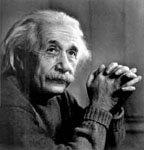
"The release of atomic energy has not created a new problem. It has merely made more urgent the necessity of solving an existing one."
Albert Einstein