Thursday, October 05, 2006

Movie Continuity

Okay I have a confession to make. I'm the guy in the theatre who analyzes the technical aspects of the movie and then comments on them while the movie is going. When Spiderman dives off the balcony and catches up to Mary Jane, I was the guy who said, "Oh so Galileo was wrong about things falling at the same rate regardless of mass!"
And when Clint Eastwood manages to pull maneuvers that the space shuttle could never do, I'm the guy who said, "Yeah right! The shuttle main engines are completely out of fuel during re-entry and so he could never do that."
It's really funny that I can still suspend belief on some things but get really torqued about others. Yesterday I was watching a Dr. Who episode and they were talking about using the Hubble telescope to monitor an alien ship orbiting Mars. My response, "No way! Hubble’s lens were not designed to focus on anything that close. Every picture you've ever seen of Hubble has been extra-solar for a reason. It just can't focus that close." Mind you I had no problem at all with the fact that there was a time-lord on earth who traveled from time to time in a police call box. I could suspend belief on that but don't make me have to revise what I know about the Hubble.
I think that as long as it's a fantasy movie I can suspend belief. But once they start relying on the science as a plot point I start holding their feet to the fire. If they claim it’s a fantasy from the start then I just assume that normal rules don’t apply and I just deal with it.
For the most part it doesn’t bother me for little errors but if they really start adding up I have a hard time focusing on anything but the problems. I actually enjoy this little diversion so I hope nobody is reading this as an apology or some prelude to a recovery. I haven’t entered a 12 step program to reform my critical ways. “Hi. My name is Michael. And I’m a recovering movie continuity geek.” I don’t think so. I believe that it is people like me that make or entertainment better. Somewhere there is a group of people at the studio asking questions about scripts like, “How will the science geeks interpret this?” I see it as my duty to keep them employed.
I have no illusions that I am an expert at this craft. Some people have really applied this art to the limit. Like this guy. And a few have taken this craft to the completely absurd. Like this guy. I hope that I never digress this far. If I ever get close then perhaps you might see me standing in front of a group of people with tape on their glasses saying, “Hi. My name is Michael. And I’m a recovering movie continuity geek.”

Wednesday, October 04, 2006

Rough Stone Rolling

I posted this book review on another site last year but I just wanted post it here too.

My Review of Joseph Smith: Rough Stone Rolling by Richard Lyman Bushman

Most of the church histories that I have read fall into one of two categories. Those written by anti-Mormons with an ax to grind that focus in on the salacious details and freely use any source at all to get those details. Or those written and published with the official sanction of the Church that so whitewash the blemishes of the history that they are reduced to simply faith promoting narratives. Bushman’s book does not fall into either category.

Being an active member and also a professional historian he was able to create the most realistic Joseph that I have ever read about. His membership allowed him unprecedented access to the Church archives. The narrative is full of very faith promoting stories that have been absent the officially sanctioned works because the stories happened during the mist of controversies that have been swept under the rug. These stories were also absent in the anti-Mormon books because they did not fit their agenda.

Bushman does not dance around any of the controversial issues that surround Joseph. He analyzes every one of them. Frequently he goes into great detail and has impeccable sourcing. He addresses even the most baseless claims of the anti-Mormon books and tries to establish how they may have come to their conclusion. His incredibly fair and even handed approach to all of the claims lend the reader to believe him when he says things like, So-and-so claimed that Joseph did X, Y, and Z but I have not been able to find any source for this claim.

My only serious criticism is that the book seems to assume that you already have read several other books on Joseph. This did not bother me too much because I have. He frequently references claims made by other biographers and if you haven’t read those biographies you might be a little lost at some points. He also assumes you know the basic timeline of Joseph’s life and jumps around along the timeline to make many of his points. Sometimes this is a little annoying and hard to follow. I imagine it could be very frustrating for somebody who is not more familiar with the timeline.

Personally, I still have many struggles attempting to understand the issues surrounding Joseph Smith, especially the last few years of his life. I find the whitewashed histories published by the church to be so utterly without substance that I have to force myself to continue. The Anti-Mormon histories are so bitter and one-sided that they just aggravate me. This book is exactly what I needed, a fair relatively unbiased biography that examines the incredible life of Joseph Smith without feeling the need to remove all of his warts.

Tuesday, October 03, 2006

The Illusion of Difference

As I pointed out in my 9-11 posting, I'm deeply troubled by the state of our world today. All too often we as a human family are content to divide ourselves into arbitrary groups and then go about trash-talking and dispising those artificial distinctions that we've created. The killings in the Amish school yesterday brought this even more to my attention today. Here we have a man who had some grudge against young girls so he takes his anger out on a completely different group of girls just because they appear to him to fit the arbitrary group that offended him. Personally, I am at a loss tying to think of a less threatening group of people in the world than grade school, Amish girls. Perhaps maybe premature newborns in ICUs. I just don't get it. What is this world coming to?
I've never felt like I was much of a poet or even that I was good at getting my emotions and my ideas into words. Former President Clinton had an interview on Fox News last week. Lost in all the publicity over Clinton loosing his temper was a very profound quote. (I should let you know that I don't really have any serious ethos problems when using quotes. I may or may not agree with the overall opinions of the quoted but if they manage to hit the nail on the head I'll be sure to give them credit for it.) Clinton told interviewer Tim Russert that the biggest problem confronting the world today is "the illusion that our differences matter more than our common humanity." I have tried since I first heard it to put this statement into my own words and I have failed. This statements seems to include everything from terrorism and school shootings all the way down to sibling rivalry. It describes most every conflict going on in the world today no matter how large or how small.
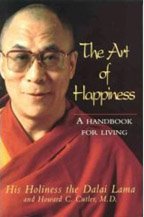
In his book The Art of Happiness His Holiness the Dalai Lama encouraged people to reach out to those that you esteme to be your enemy and befriend them. Christ encouraged us to "Bless them that curse you. Do good to those who despitefully use you". As dificult as this is to actually put into practice personally I am at a complete loss as to how to teach this principle to others and make a large scale difference in the world. My constant prayer is that I will be able to simply master this skill in my own life and my own interactions. Then hopefully the example will be felt by others.

*****

Monday, October 02, 2006

Libertarianism

A recent comment requested that I suggest a book on libertarianism. I have to confess that until that time I had never specifically read a book on Libertarianism. I've read several books on philosophy and political science as well as several books and research projects on Hobbes and Locke that helped me to form my libertarian opinions. I also subscribe to an newsletter from lp.org. I have been a "card carrying" member of the party since 2000. I've aggressively studied and defended the party platform ever since.


In an attempt to remedy my apparent lack of scholarship on the subject I read The Great Libertarian Offer by Harry Browne and What it Means to be a Libertarian by Charles Murray. If you'd like to read a well documented defense of the party platform complete with charts, graphs and extensive footnotes then read Harry Browne's book. However, I thought that Murray's personal narrative and his deliberate lack of footnotes made for a much easier to read and persuasive book. If you are new to the philosophy and you would like to know a little bit about what they believe and why they believe it then I think you would also like Murray's book. If, on the other hand, you are looking for charts and graphs to convince you then read Browne's book.

Murray considers himself a lowercase libertarian as opposed to the uppercase Libertarians. I'd never heard this distinction made but, I believe it applies to me too. In spite of the fact that I'm a card carrying member I have always been attracted more to the philosophy rather than the party. I have several issues with the strategy and motives of the party. I am also under no delusion than the Libertarians will have chance at toppling either of the established parties. I do however believe that if we are going to return to the values and philosophical goals of Jefferson, Franklin, Hobbes and Locke that it will be a return to libertarian ideas that takes us there.

Sunday, October 01, 2006

...and no one will ever convince me otherwise.


I took debate in high school and I enjoy studying logic and critical thinking. I make it a point that when I discuss politics or any other controversial topic to be very logical in my arguments and to recognize when the other side makes logical arguments.
I try to stay open minded with all of my beliefs. As I have matured many if not most of my opinions have evolved quite a bit.
All to frequently, especially in political dialogue, I hear people say, "...and no one will ever convince me otherwise." When ever I hear this statement I know I am talking to a scared and closed minded person. An open minded person readily accepts all attempts by others to be proven wrong. Whoever would say this is essentially saying, "This is how I believe. I expect you to change you beliefs to follow suit, and don't insult me by even asking me to consider other possibilities."
What disturbs me most about this attitude is how pervasive it is. Many people who refer to themselves as Christians us this quote when discussing evolution. I'm sure Galileo and Copernicus were told similar things for defending their beliefs. These historical examples illustrate how dangerous this belief can be.
I hope that I never get this closed-minded. Even in the opinions that I hold strongest I'd like to at least be able to say, "I'm rather set in my ways on this however I invite you to try to prove me wrong."

Friday, September 15, 2006

Mortality

Until I was in my thirties I had never had a family member or a close friend die. Unfortunately, this abnormal statistic was followed by a wave of deaths both in the family and among friends. I felt like my boss was getting suspicious that I was making up all of these funerals just to get some paid time off. The result of this is that I have probably spent more time thinking about this the last five years than I ever have before, not just my own mortality but how to fill the voids left by others that were close to me.
A columnist that I read often gave the following advice about how a man that I admire is facing his own mortality. I have posted the article in it entirety sinces he share many of my beliefs.


Facing mortality can be life affirming
by Robert Kirby

When the LDS Church dedicated its latest temple in Sacramento, Calif., last week, Mormons were pleased to see our leader acting like his spry old self after his bout of recent health problems.
However, at a youth gathering in the Arco Arena, President Hinckley seemed to predict his own death by alluding to the increasing fragility that comes with old age.
"I don't know how long I'm good for and it may be the last time I'm in Northern California, but I'm here today," he said.
Mormons were suddenly abuzz with the possibility that the prophet might get "called home" in the next few days. How much longer could a man of his age last? Did he know something was up?
I'm not sure why anyone would marvel over such a revelation. President Hinckley is nearly 100 years old. He probably wants to be dead. I would if I was that old, my wife was gone, and millions of people pestered me all day long.
He didn't say he was going to die. He simply pointed out a truth that applies to all of us. Who knows from one minute to the next when death is going to crook a dry finger at them?
Granted, we expect death to come for the elderly because no one lives forever. And the older you are, the more likely it is that your time is up. Eventually you reach an age where people stop asking you what you want for dinner.
Ironically, some of the people among the thousands who heard President Hinckley ponder his own mortality last week - and maybe dozens who later read about it - had no idea that they could beat him to the other side.
Through traffic crashes, heart attacks or strokes, death may have come for a few who were wondering how much longer an old man could last. They didn't realize that their own lives were over.
None of us do. Maybe you're one of the people reading this column who won't see the end of next week or even the end of today. Heck, I might not live long enough to finish writ. . .THUNK!
Just kidding. It's not morbid to acknowledge that life is short, often far shorter than we think it is. This simple fact ought to cause us to worry more about living better than longer, but it doesn't.
Most of us act like we have an unlimited supply of tomorrows. We don't live like we were dying even though we are. We have to consciously remind ourselves that it may be the last time we're "in Northern California" or holding our kids, our telling someone that we love them.
Live like that and maybe dying won't matter as much.

Wednesday, September 13, 2006

Stewardship

I was deeply saddened by the recent and untimely death of a role model to me. Steve Irwin inspired me to reach out to my world and have a healthy respect for but, not be afraid of wild things. The conservation world has lost a giant. My kids have been watching Crocodile Hunter reruns as often as possible since we heard the news.
About once a year at church we get a lesson on stewardship. Typically the lesson turns into a lesson about missionary work and our stewardship to others. Sometimes it becomes a lesson on talents. All too often we miss the lesson on being wise stewards of the resources of our planet. Irwin showed by his example that it is vital that we protect the fragile wildlife of this world. I think that many people, particularly Christians, take the attitude that Jesus will be here soon so we don’t need to be as good a steward as we would if it were going to be a couple thousand years before he comes back. Personally, I think we should try to “get the house clean” before he comes home.
Irwin set this example for me. I will never forget the complete enthusiasm that he had over even the smallest of God’s creatures. He is one of the few people that gave nature that reverence that she deserves. As a tribute to Steve and his example I am making a conscious effort to add the work “Crikey!” into my vocabulary.

9-11-2001


I deliberately waited a few days before posting a 9/11 comment because it took me quite a while to compose my feelings about that terrible day.
The last five years have been very hard for me. It has been very hard for me to deal with all of the hate that seems to have been growing in the world. Terrorists hate us so we hate them back. Politicians and pundits justify this hate with child-like responses that just sound to me like "well he hit me first". I think the world is much more divided than it ever has been, not only internationally but domestically, and this worries me a lot. It’s been really hard for me to see our world play a game of “My God can beat up your God” while most everyone seems to be ignoring the actual teaching of their God. I have a vague recollection of being taught that we should turn the other cheek, love our enemies, and bless them that curse us. Perhaps we are just supposed to put all that stuff aside when it comes to real life and that’s just Sunday school rhetoric. By no means am I claiming that it is easy to do all of these things that we’ve been asked to do. I just see so few people even trying that it’s really discouraging.

The only light I see in all of this is that this background of hate gives better focus to those who are truly unselfish and set this hate aside to show true love for their fellow beings. The images of firemen writing their names and social security numbers on their chests with a sharpie because they know they are going to die trying to save others will always bring tears to my eyes. Here we have a great example of some people who get it. Developing this type of love is why we are all here. I have a long way to go but it is nice to see a few real role models out there for me to model my behavior.

Wednesday, September 06, 2006

Mormon Cinema

A few years ago a new genre of movies emerged. Thanks to a visionary producer named Richard Dutcher and his company, Zion Films, Mormon Cinema was created. In his mission statement for Zion Films Dutcher analyzed the religious themes in “Fiddler on the Roof”. He claimed, and I agree, that this movie was better because of the Jewish theme not in spite of it. Dutcher believed that similar movies that did not shy away from Mormon doctrine and experiences could produce equally moving tales. Since Dutcher opened the way with “God’s Army” many have followed. It saddens me to say that only a few of these movies have had any appeal at all outside the LDS community and only one has even approached Dutcher’s comparison to Fiddler on the Roof. What follows here is my review of the Mormon cinema films that I have seen in the last few years.

God’s Army
A good movie about a few relatively average missionaries and a reasonable example of missionary life. I think every returned missionary can put a real name to each of the fictional characters in this movie. I liked the theme of each missionary having to figure out why he was on a mission. A great movie for LDS members but non-members would need a translator to explain what many scenes meant and why they were important, or funny.

The Single’s Ward

A good movie that dealt with the struggles of a divorced male trying to fit back in to a community that he felt has labeled him as a reject. LDS members from
Utah will particularly enjoy the countless cameos in the film. Unfortunately the cameos, and the jokes behind them, are completely missed by many members without links to Utah. I enjoyed the film as a comic look at dating in a Utah singles Ward but I fail to see how it would appeal to non-members.

The RM
This movie was essentially Singles Ward II. Rather than exploring the challenges of a divorced member it explored the awkward steps that a returned missionary takes while attempting to adjust to post mission life. Another one that I didn’t think was a waste of time but would hardly recommend it to my non-member friends.

The Best Two Years

I thought this was a good movie. I liked it better than God’s Army. It illustrated some of the struggles that foreign missionaries go through as far a separation, relationships, companions and struggles with the language. How living the gospel can change lives was a main theme. This appears to have been filmed rather than video taped. The quality of the images and the care taken in setting up the shots really set this movie apart from all the rest. In spite of this being a pretty good film, here again the strong mission theme here would still probably only draw LDS viewers.

The Book of Mormon, The movie.
I must confess that at my wife’s behest I did not add my admission fee to this movie. I didn’t go see it. Her review was that she had seen better costumes and acting back in the 80s when they still did roadshows. I was very suspect of this when I read on the film’s website during the casting process that they were looking for a Nephi that looked like the Arnold Freeburg paintings. They didn’t care if he could act and they would consider dubbing his voice if he looked a lot like the Freeburg Nephi.

Brigham City
So far this is unquestionably the best of the genre. The themes of everybody having skeletons in their closets and the conflicted Bishop who is also the sheriff dealing with separation of church and state issues. A great movie about casting aside stereotypes and learning to forgive. I would recommend this to anybody. The sad part about this movie is that the strong murder mystery main story gave it a PG-13 rating. This rating scared away much of the core LDS audience. I think this movie would have done much better if it had been shown outside of Utah. Ironically the picture that came closest to Dutcher’s own “Fiddler on the Roof” standard was panned by his most loyal audience over the rating.

Saints and Soldiers

I don’t care for war movies. However this one was very different. It will challenge your concept of how you define someone as a friend or an enemy. I’d like to see more LDS films explore these types of serious themes.

Work and the Glory

My wife read the books by Gerald Lund that this movie series is based on. From her reports they seem to be faithful to the books. The first movie is well done but it never quite escapes the ABC miniseries soap opera feel. I like the historical fiction about a fictitious family with the Joseph Smith story as a background support. Done right as they did with Ben-Hur, this strategy can be a great way to tell both the fiction story and the real history behind it. I think they’re headed in the right direction with these films and I look forward to seeing them all.

Baptist at Our Barbeque
Done right this movie could have had a great out reach to non-members. The concept of two conflicting communities trying to get along in the same town lead to a lot of issues about who is truly our neighbor. Unfortunately, they resorted to slapstick and jokes and avoided the more serious issues that could have been dealt with in a film with this title. It was entertaining but hardly high-cinema.

The Home Teachers
Another skinny guy and fat guy slapstick road trip movie. Not much distinguished this movie from Tommy Boy. The fat guy even looked like Chris Farley. Knocking a corpse out of a coffin at a funeral, a toilet falling through the ceiling, hich-hiking after they destroyed the car, etc. etc, ad nauseam. The last 10 minutes of the movie they tried to pull it out of the gutter by finally understanding why they were home teaching in the first place. I’m sorry, but it was too little too late for me to give this a thumbs up.

Mobsters and Mormons
This was a cute movie. The acting was good and there were some good morality issues covered, also a few valuable lessons about judging others. As much as I enjoyed this it was still just like an LDS version of For Richer or Poorer. Again we have a movie that makes jokes about LDS culture without even approaching any doctrine. There are jokes about coke, scrapbooking, etc but nothing too deep. The saving grace for this movie was the last few minutes when the mobsters explain how they were taken in by some folks who truly treated them like neighbors. Watch it. It’s fun.

Suits on the Loose

This is a story about two young convicts who escape from a work camp and end up hiding within the Church as missionaries. Personally I though Nuns on the Run was much funnier and had almost exactly the same theme.

Sons of Provo
A tounge in cheek look at a Mormon "boy band". The soundtrack is hilarious but that's its only saving grace. Like many others this movie seems to targeted souly to LDS members.

I have yet to see States of Grace. The reviews have been very good and I have high hopes for it. I’ll post a review once I’ve seen it.

I also haven’t seen Church Ball or Take a Chance yet. They look reasonably entertaining but I’m not holding my breath that either with approach the “Fiddler on the Roof” standard.

I think the saddest thing here is that there is no impetus for these films to get better. The core market, LDS members, buys these mediocre movies as if they were canonized. If the members keep this up the quality of the movies has no reason to improve. Just because it isn’t a “bad movie” i.e. rated R, doesn’t necessarily mean it’s a good movie. Only a couple of them have the doctrine as a central theme. Most are mearly about the LDS culture outside of the doctrine. As these films’ core audience we should coax them in the right direction. I would encourage members to continue viewing these movies but to be more selective and objective. If we don’t hold the genre to higher standards than we have been they will never get any better. Although most have been entertaining nothing I have seen in any of these films has grabbed me with the intensity of Tevye singing the line, “Then I suppose I love you too.” Keep trying. I’ll keep watching.
Friday, September 01, 2006

Science v. Religion


This has been a common theme for me but recent events have made me think about it again. Last night I picked up a book and started reading A Jealous God: Science’s Crusade Against Religion. I didn’t even make it through the introduction before I became convinced that this is just another one of the many books written by Christian conservatives that attempt to paint scientists as immoral and godless. If that is not the case then I apologize to the author. I would recommend that she not set that tone if she expects anyone other than someone who already believes her way to read it.
I get to work early so I can read the news on a couple of my favorite sites before the rest of the crew shows up. While reading I learned that The Catholic Church has fired its head astronomer for speaking out against Intelligent Design. Claiming that it wasn’t based on science, which I agree, Father Coyne was concerned that trying to link God with this theory was demeaning to God.
In my review of How We Believe I explained how Michael Shermer believes that people are in one of three different stages in their relationships with God and science. First, they believe that the two are in conflict. Second, they believe that the two are harmonious. And third, they believe that the two exist in completely different spheres. From what I have read it appears that Coyne was in stage two or three and he was fired by a Vatican firmly entrenched at stage one. In spite of some of the steps that the Vatican has taken in the last century to make amends with science, I see this as a huge step backward.
I just do not understand why religion is so afraid of science. Contrary to books like Godless and A Jealous God I do not believe that science has the same animosity towards god. Granted there are exceptions, however for the most part I think scientists just treat religion as being irrelevant to their work. Science is based on physical laws and testability. Basically they take a logical positivist philosophy. Basically that if it isn't physically real then it isn't testable and is not the domain of science. Since they refuse to place an ultimate value judgment on it religion takes offense. I believe this offense is needless and irrational. From personal experience I can say that there came a tremendous peace both to my spirit and my intellect when I stopped trying to make the two worlds harmonize. When, if ever, will religion as a whole learn this lesson?