Monday, May 24, 2010

Martin Gardner

When I was about 10 or 12 I went to my Dad’s office with him at CDC. He had to work on a project and I thought it was cool to hang out at his office in a real laboratory. I have a feeling that I was a lot like Noah an I was probably asking him far too many questions. Rather than just shut me out completely he looked for something that would keep my interest and yet still allow him to have an independent thought. He had a book on his desk that he handed me to read while I waited for him to finish his project.
The book was Aha Gotcha by Martin Gardner. It was a really fun read about several mathematical paradoxes and logical fallacies. Gardner used some very simple stick figures to illustrate each problem. This made it very appealing for a geeky little boy. The science was very deep but the cartoons made it fun to read.
This book was my first introduction to the concept of critical thinking. I frequently fall back on the lessons I learned by reading it. Gardner teaches us to not accept things at face value and look a little deeper into the problem and try to find the real solution and not just the paradox that you first perceive. I get a little chuckle when I see a magic trick and realize that I know the core of trick thanks to Gardner.
I was saddened by the news that Martin Gardner had died this weekend. I need to be sure that I do my part to make sure his legacy lives on. Yesterday I pulled my dad’s copy of Aha Gotcha off the shelf and thumbed through it. I’m gonna make a point to share it with my kids tonight.

Saturday, May 22, 2010

Riding in Cars with Boys

This conversation took place while driving three ten year-old boys who are unapologetic geeks to the movies.

Noah: I'm telekinetic
Me: Oh really? Well if you're telekinetic raise my hand.
pause
Me: But I really am telekinetic.
Boy1: Oh Yeah, prove it.
Me: I can make everybody in this car suddenly lurch forward.
At this point I was coming to a stop anyway so I hit the brakes a little harder that I normally would have.
Noah, Boy1 and Boy2: (in unison) That's not telekinetic. That's just kinetic.

Thursday, May 20, 2010

No Apology

I try to make it a habit to read books that are outside of my comfort zone. I just don’t think it’s healthy to walk around and only accept input that just reinforces what you already know or want to believe. So that’s why I decided to read No Apology: The Case for American Greatness by Mitt Romney.

Some have accused me of being an antagonist who just goes against the grain of those around me because I enjoy that. I’ve done a fair amount of introspection on this subject and I can completely accept why they might come to that conclusion. I do have a tendency to play devil’s advocate just for sake of a discussion. It often gets interpreted as having opinions that I don’t necessarily have. I find that I have to careful not to adopt an opinion or belief just because I took that position in a discussion. A few weeks ago I had a discussion about organic gardening with a friend. He took one side and I took another. My real views on the subject are on the same side of the aisle as the position I took with him, but I do not share some of the extreme positions that I used rhetorically in our discussion. Those points were just brought up to get both of us to think about the issue.

Spending so much of my life around other Mormons I get a lot of people who just assume that I’m a fan of Romney. I personally believe that many of these people would vote for him just because he was a Republican and a Mormon without doing any further research on his positions and views. So quite a few times I’ve asked people leading questions worded something like “How do you feel about Romney’s position on X?” They then give me their view on X and assume that since they are Mormon and Republican that the two must jive. All too often they do not and it is apparent that they haven’t really done their research on the positions of the man they trust with their vote.

So with this in mind I read No Apology: The Case for American Greatness. Now that I’m finished I think I’ve probably spent more time vetting this one particular candidate than I have ever spent on any other. I’m sure it’s the frequent subtle and not so subtle encouragements to give him my vote that have caused me to really be sure that I understand him. I just felt like I had to be sure that my opinions on Romney were based solely on the fact that I had gathered the facts on his positions and weighed them on their merits. I felt I had to make a conscious attempt to resist the knee-jerk reaction of going against the grain.

Had this book omitted the introduction I would have been able to accept it easier. Before chapter one even started Romney gives a list of things that the book is and what it is not. One thing he claimed that it was not was an attack on his opponents. Unfortunately, much of the book is exactly that, an attack on the policies of President Obama. As Seinfeld would say, “Not that there’s anything wrong with that.” I think many of the President's positions deserve criticism. It’s just a little misleading when your introduction says you weren’t going to go down that road. The very title of the book is thinly veiled criticism of what he and other conservative have dubbed President Obama’s apology tour. I think an honest admission of fault is a sign of greatness and not a sign of weakness. I think we all know how hard it is to patch thing up with a friend or a family member when one side refuses to admit any wrong-doing. That being said I too think the President took it a little too far by showing up everywhere with his heart on his sleeve. I would add that all through this section I was very proud of Romney for always referring to the President as “President Obama” and not by a pejorative like so many other conservative writers do. Romney is a class act and his respect for the office even when he disagrees with its policies is something more of us could learn from.

If I were ever to vote for Romney it would be because of his profound understanding of finance and economics. His track record has proven this again and again. He has also showed that he has a clear ability to explain his position. The man is articulate and truly brilliant. I can’t for the life of me figure out how he lost the nomination. Perhaps it was that he was too articulate and didn’t have the folksy charm or the “wanna sit down and have a beer with” image.

I took a little bit of issue with his criticism of the Fair Tax. He has a different strategy for tax reform, actually one that I agree with more than the Fair Tax. But I was disappointed with how he defended his position. A common way to attack the Fair Tax has been, rather than to judge it on what it really is, to quote a few critics’ opinions of what it might look like once implemented and them destroy that straw man. He took the same tired path of ignoring the reduction in cost once the imbedded tax is removed and even increasing the new tax to a percentage that isn’t even proposed. Now, as I said, I actually like Mitt’s plan a little better since it doesn’t create such a huge windfall for the extremely rich. He just could have defended his position without having to take the same, logically flawed position that so many others have taken before him.

While speaking about Islamic fundamentalism Romney praised Jefferson for helping to create a form of government that is separate from religion. I found his praise of Jefferson comforting but also a little hypocritical from someone who so frequently uses his own religious views to attract votes and even thinks he is a better candidate because of his Mormon faith.

The chapters that I really found the most disheartening were the several chapters where he kept repeating the call for the U.S. to go back to its Cold War military strength. Romney’s foreign policy is little more than "peace through superior firepower" and might makes right. If we aren’t the world’s police officers then who would you choose? I found this false question amusing, and a little sad.

With these criticisms you might find it hard to believe that I am actually a little swayed towards voting for Romney based on reading this book. Right now his economic positions might be just what we need. I also was swayed by his immigration position (i.e. doing more to keep the most qualified immigrants in as well as protecting the borders). Despite my serious disagreements with his foreign policy right now his economic policies and tax reform ideas may be just what this country needs. I sure don’t see myself voting for him yet, but thanks to this book I’m more open-minded about him and I feel like I understand his views.
Monday, May 17, 2010

Tuesday, May 11, 2010

Dad, Can we listen to another one of those “I’m Brian Dunning” programs?

I don’t remember what exactly prompted it, but Sunday evening we were on the way home from my mom’s house and the kids got started talking about evolution. At some point one of the younger two said that we evolved from monkeys. Then they got into a debate over whether it was monkeys or apes. I had to interject and tell them both that they were on the right track, but that neither one of them were technically correct. I did my best to explain that monkeys, apes and humans all had a common ancestor, but that it wasn’t a modern ape or monkey.
I got my wife hooked on listening to the Skeptoid podcast a year or so ago. She suggested that we let the kids listen to Brian Dunning’s explanation of this common misconception. So with a little searching on the iPhone I downloaded a few episodes. The kids enjoyed the first so I just let it run through a couple episodes. It made for a very nice and educational ride home.
Well yesterday I had Noah and Eve in the car and I had the radio on. Noah piped up and asked, “Dad, Can we listen to another one of those ‘I’m Brian Dunning’ programs?”. Not to be one to stand in the way of a 9 year-old and a 7 year-old who are curious about science, I handing him the iPhone and let him listen to a few episodes. After we got home he kept my phone and ran upstairs and listened to a few more. He was really excited that Brian actually had a video podcast too. So he probably spent and hour watching and listening to Skeptoid and InFact before he went to bed.
I listen to a lot of podcasts, particularly a lot of podcasts that focus on science and skepticism. I enjoy them all but several of them are not safe for children. It’s a shame because as I’ve demonstrated with this little story there is a market for at least a few kids. I want to thank Brian Dunning for doing such a great podcast and keeping it accessible to all ages. I encourage you all to check it out too, no matter how old you are.

Monday, May 10, 2010

That’s Not Fair

So last week Victoria was reading aloud a news article about some of the budget cut that the state is implementing for Georgia schools. Some of the cuts I agree with and others I think are really cutting to deep in the wrong areas. Anyway, not to get off track on a political discussion, one of the budget cuts called for cancelling a certain test that is currently required in 2nd grade. I think this is a good thing. I just feel that we have too much testing in order to qualify for federal moneys, etc, and not nearly enough teaching. Apparently the state agrees and felt that this test really wasn’t needed.
Well as Victoria was reading this article to me my 6th grader, upon hearing that her sibling will not have to take this 2nd grade test exclaimed, “That is so unfair!”. Hmm. This got me thinking. Why did she feel this way? So I asked her. Did she think the test was meaningful? No. Did she herself benefit from the test? No. Then why did she think it was unfair? After a little discussion I discovered that she thought the change was actually for the better but she was upset that they hadn’t done it while she was in 2nd grade.
I wonder how many times we have continued a tradition, a ritual, or anything that we didn’t like when we went through it just because we think it would be unfair for us to have to do something that those coming behind us didn’t have to do. How often do we put our kids through things just because that’s the way we had to do it? I wonder how deep this mindset penetrates our society. Last year Victoria read a book that had Chinese foot binding as a major theme. I wonder how many of these women did these to their daughters just because they felt it would be unfair for them to not go through it after they had. I wonder if there were any salve owners in the south who felt that slavery was wrong but that it would be unfair for them to try to work without them. I could go on but I think you get the point.
I’ve given my kids the “walk to school in the snow, uphill both ways” argument several times. When I do it I hope they are taking away from it that I think it’s cool that they have access to cell phones, the internet, and other modern conveniences. They should be thankful that they have all of these things. I sure hope they don’t think that I’m crying foul. Yes, I wish that I’d have had some of the benefits as a kid that they have now. But I would hate for them to think that I’m putting them through something that I disagree with just because I had to do it.

Monday, May 03, 2010

Argument From Final Consequences

Today's logic fallacy comes to us courtesy of Rush Limbaugh. The Argument From Final Consequences is when someone attempt to prove that whoever benefited from something must have caused it. Not long after the terrorists attacks of 9-11-2001 several conspiracy theorists noticed that many of the civilian contracts in Iraq and Afghanistan were going to Haliburton. Dick Cheney had financial interest in this company. Therefore, without any other evidence the conspiracy theorists concluded that Dick Cheney caused the attacks on the World Trade Center. It's ridiculous.
Now sure it may look suspicious if a man dies a few days after his wife takes out a larger life insurance policy. And that is definitely a red flag that should be investigated. But the timing of the benefit alone is not enough to prove anything.
Well today Rush Limbaugh is claiming that extremist environmentalists blew up the BP drilling rig in order to affect the upcoming vote on energy policy. Sure the timing is suspicious and if there is any evidence supporting it it should be seriously looked into. But the timing alone is not proof.
The logic is fallacious when it's left wing conspiracy theorists attacking Cheney. It's just as fallacious when it's Limbaugh attacking environmentalists.

Monday, April 26, 2010

More Noahisms

Noah: Dad how long have we had Earth Day?
Me: I think I saw somewhere that this was the 40th year.
N: And who invented Earth Day anyway?
M: I don't know, Noah. Why don't you look it up when we get home and then let us know what you found out.
N: Naaa. It was probably just some hippy.

Saturday, April 24, 2010

The Line Drawing Fallacy

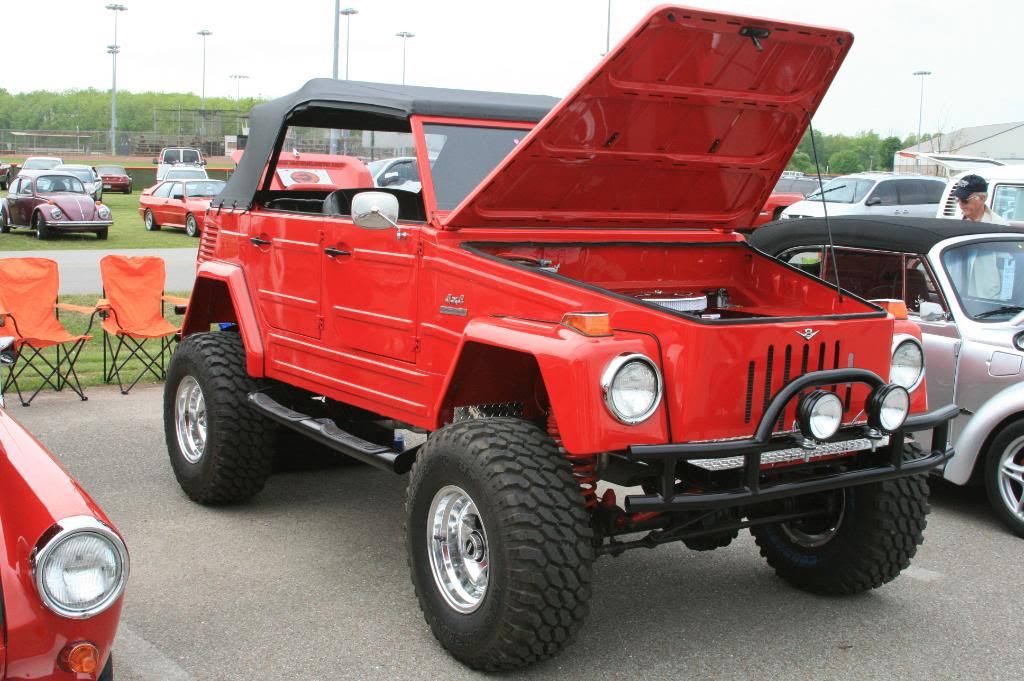
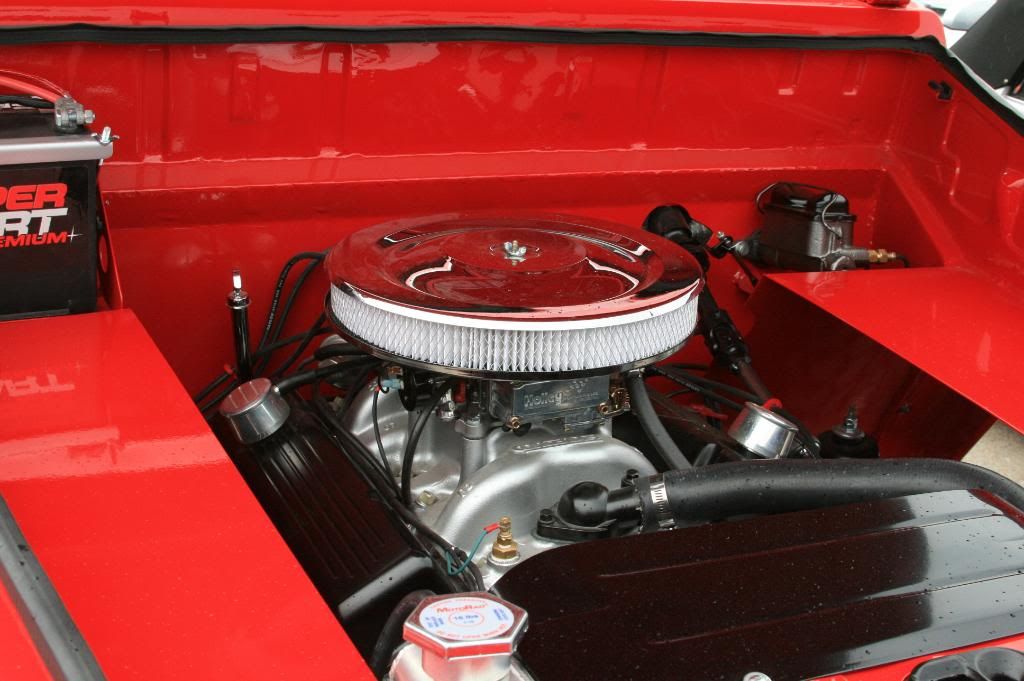
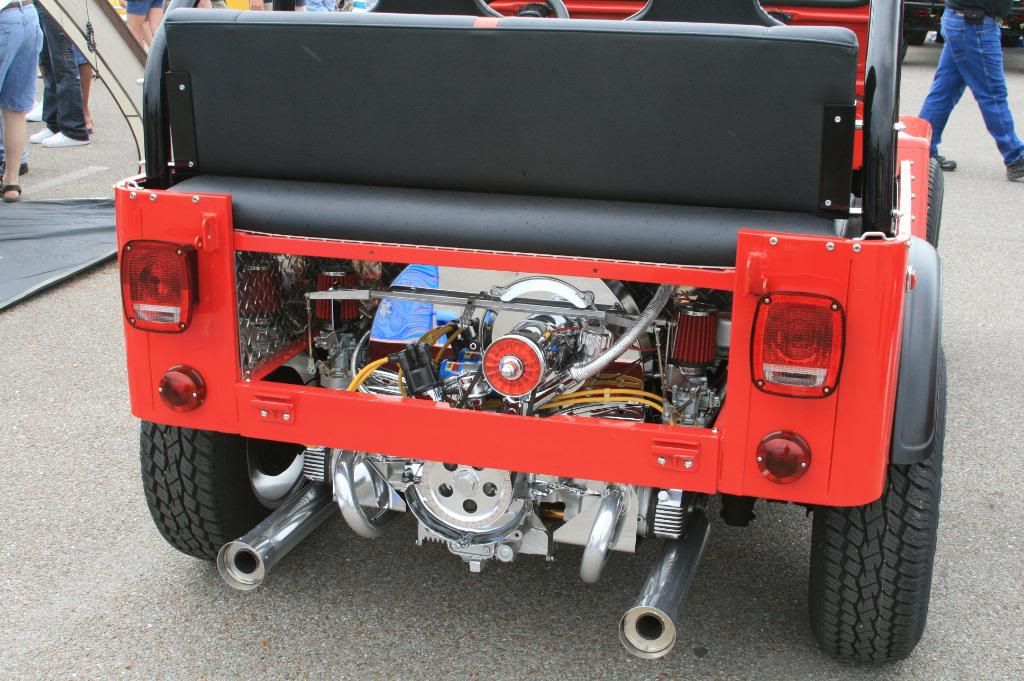
Take a second and look at these four pictures:
image1 image2 image3 image4
For those of you who aren’t familiar with the cars here, there is a Volkswagen Thing and a Jeep. The question now is “Which is which?” The one that looks like a jacked up thing actually is 4-wheel drive and has the motor in the front and the one that looks like the Jeep has the motor in the rear.
These pictures reminded me of a logical fallacy called the Line Drawing Fallacy. I’m going to modify it from the way I first heard it in order to fit these pictures. Let’s suppose that I have two cars in the garage. A Volkswagen on the right and a Jeep on the left. One day I decide it would be fun to start swapping parts form one car and sticking them on the other. I start with a bumper. Then I move to fenders. Then on to the to more serious stuff, the suspension, the wheels, drive train, frame and on and on. When I’m finished I will have a complete Jeep on the right and a complete Volkswagen on the left. Now for the big question. At what point in the process did the Jeep become the VW and the VW become the Jeep? Was it when they swapped the frame? The motor? The hood emblem? So far there isn’t a logical fallacy, just a philosophical conundrum. But what if I challenged the identity of the cars like this? Since you can’t exactly answer when the VW became the Jeep then the car on the right must still be the VW even though it now has every single part of the original Jeep.
It kind of sounds absurd when you are talking about cars. Nevertheless, people make this fallacy of reason frequently. I hear it frequently in the debate about the definition of life. Some argue that since you can’t really define when a person became alive then we must have always been alive. The most egregious abuse of this concept came years ago during the trial of the officers who assaulted Rodney King. An attorney asked the question, “At what point did the officers use excessive force? Was it after the first hit, the second, the third?” He then went on to tell the jury that if they couldn’t define exactly when it became excessive then they couldn’t accurately define what excessive force meant and the officer was not guilty. The other attorney, recognizing the fallacy, approached the jury and took a book and slammed it against the table the exact number of times that King was hit. I think it was 23 times. He then said, “I don’t care exactly when their actions became excessive. It was somewhere between the first hit and the 23rd.” And that’s the correct answer here too. There are multiple shades of gray in our world. But that doesn’t mean that black is the same as white or that Jeeps are the same as VWs.

Monday, April 19, 2010

Your Inner Fish

At the recommendation of Teacherninja I recently read Your Inner Fish by Neil Shubin. Thanks for the recommendation. I really enjoyed it.
Shubin is a paleontologist and it was his research that discovered Tiktalik, a fossil animal that was almost exactly what was predicted to have existed halfway between fish and land animals. Much of the book describes that expedition and the others that lead up to it.
The book does not stop at just Tiktalik. He builds on the similarities and spends a great deal of time showing how so much of biology is based on remarkably similar structures. He show how early in the development of nearly every embryo, chicken, fish, squirrel or human the same organs form from the same rows of cells in each species even though they may have drastically different uses in the final creature. I found these chapters very fascinating.
Shubin avoids pretty much entirely that political debate that is currently going on about teaching evolution in schools. I guess from his perspective evolution via natural selection is such an established fact he felt no need to defend it. I agree with this position. It was a science book and I don’t fault him for setting all politics aside and just speaking to the science. I would like to point out that Shubin’s discovery of Tiktalik was predicted by evolution and that Tiktalik made his appearance during the middle of the Dover school board’s attack on teaching evolution in school. I’m sure Shubin didn’t plan it this way, but at the same time the Dover school board had “experts” testifying that no transitional fossils had ever been found, Shubin was uncovering yet another transitional fossil.
I listened to this book on CD while working. I plan on going back and reading it for real when I get a chance. Some of the details in the middle of the book deserve more attention than I could give them just listening while working.