Saturday, October 21, 2006

I finished reading The End of Faith today. This was both a very depressing and highly thought provoking book. Over 100 pages of the book go into great detail about the millennia of atrocities committed in the name of religion. I had to really struggle to get through this section because it was colossally depressing.
The next chapters dealt with the subtle and not so subtle impact that religion has on our political system. No surprises here. I’ve always been disturbed by administrations that try to push the limits of the establishment clause and the unholy alliance of the Republican party and the Christian Coalition has given me special cause for alarm.
Although I have a hard time with Harris’s conclusions that it is time for the world to abandon religion completely in favor of reason and logic, I can find no flaws with his logic or his evidence.
One of the reasons we continue to cling to religion is that most people philosophically believe that the only source of morality is divine. Right and wrong cannot exist without a god. I have always felt that this is not the truth. I have seen personally, and this book has illustrated many instances where religious people have behaved immorally and also instances where non-theistic people have behaved morally.
The book was not a pleasant read but, its lessons will not be easily forgotten.
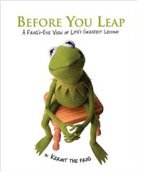
On a much more uplifting note I have just begun reading a more lighthearted book about improving myself and learning how to find a happier life. The book is an autobiography of sorts about the life of a longtime entertainer whom I have admired since I was a young child. I have always felt a spiritual bond with the author and I look forward to taking the advice of Chapter 11 and “Finding [my] Inner Tadpole” The book is Before You Leap: A Frog’s-Eye View of Life’s Greatest Lessons by Kermit the Frog.

"You must look deep inside your heart and ask what you really want. If your immediate answer is 'dessert,' you probably missed your heart and went directly to your stomach." p.76

Thursday, October 12, 2006

Stone Soup

I've always enjoyed the Russian story about stone soup. A group of soldiers passing through town are able to create a miracle. They are able to convince an entire town to cooperate in making a meal to serve a large group. All in the group were feed with a meal that they previously didn't believe they had.
The similarities here to Christ's miracle of the loaves and the fishes are very striking to me. In both stories food miraculously appears out of nowhere. In the case of the stone soup it was just a case of people softening their hearts and looking into their cupboard to share with the rest of the town. In the traditionally interpreted sense Christ's miracle was just magically expanding fish and bread that kept on feeding the multitude. What if this too was more of a human miracle like the stone soup? Would it take away from Christ's accomplishment if the true story was that people simply softened their hearts and shared what they had with the group? On the contrary I believe that it would be more miraculous. I have always felt that the greatest stories of Christ were found in what he inspired others to do. It is not my intention to belittle his miracles. Rather, I believe that the miracles that change the hearts of others are much harder and ultimately more important than the more physical miracles. Magically growing bread and fish is less impressive to me than eliminating selfishness from a multitude of people.

The End of Faith

Along the same theme that I seem to fall back on frequently; that being science, politics and religion, I just started reading a new book this week. The End of Faith: Religion, Terror and the Future of Reason by Sam Harris. Harris is a secular humanist. As such he believes that morality is a natural human trait and therefore not necessarily linked to religion. Harris takes this a step farther and believes that any religious person that claims to worship "The one true God" cannot justify religious tolerance of any kind. "certainty about the next life is simply incompatible with tolerance in this one." P.13 It is his opinion that any sacrifice in our religious beliefs in favor of tolerance is hypocritical. I have yet to finish the book and I'll provide a more complete review once I'm finished. I suspect from the tone that has been set so far that Harris is calling for the complete rejection of religion as the solution to the world's problems. So far the history of atrocities committed in the name of God that he has detailed is quite compelling. Although personally I have had very positive experiences with friends and co-workers due to my own religious tolerance, I must admit that allowing these friends to believe as they do in spite of what my church preaches seems to be a tad hypocritical. Is it possible, as Harris claims, that the only reason my friends of different faiths and I get along at all is because we have sacrificed our beliefs in favor of social harmony? Or is our appearant harmony just a facade that we wear in front of each other? I don't have answers for these questions yet. But, I'll keep looking.

Monday, October 09, 2006

Not a New Problem

With the news that the Peoples Democratic Republic of Korea, AKA North Korea, has tested a nuclear weapon the talk at work has been focused on this "new threat". I found the following quote that reflects my opinion on the issue.

"The release of atomic energy has not created a new problem. It has merely made more urgent the necessity of solving an existing one."
Albert Einstein

Thursday, October 05, 2006

Movie Continuity

Okay I have a confession to make. I'm the guy in the theatre who analyzes the technical aspects of the movie and then comments on them while the movie is going. When Spiderman dives off the balcony and catches up to Mary Jane, I was the guy who said, "Oh so Galileo was wrong about things falling at the same rate regardless of mass!"
And when Clint Eastwood manages to pull maneuvers that the space shuttle could never do, I'm the guy who said, "Yeah right! The shuttle main engines are completely out of fuel during re-entry and so he could never do that."
It's really funny that I can still suspend belief on some things but get really torqued about others. Yesterday I was watching a Dr. Who episode and they were talking about using the Hubble telescope to monitor an alien ship orbiting Mars. My response, "No way! Hubble’s lens were not designed to focus on anything that close. Every picture you've ever seen of Hubble has been extra-solar for a reason. It just can't focus that close." Mind you I had no problem at all with the fact that there was a time-lord on earth who traveled from time to time in a police call box. I could suspend belief on that but don't make me have to revise what I know about the Hubble.
I think that as long as it's a fantasy movie I can suspend belief. But once they start relying on the science as a plot point I start holding their feet to the fire. If they claim it’s a fantasy from the start then I just assume that normal rules don’t apply and I just deal with it.
For the most part it doesn’t bother me for little errors but if they really start adding up I have a hard time focusing on anything but the problems. I actually enjoy this little diversion so I hope nobody is reading this as an apology or some prelude to a recovery. I haven’t entered a 12 step program to reform my critical ways. “Hi. My name is Michael. And I’m a recovering movie continuity geek.” I don’t think so. I believe that it is people like me that make or entertainment better. Somewhere there is a group of people at the studio asking questions about scripts like, “How will the science geeks interpret this?” I see it as my duty to keep them employed.
I have no illusions that I am an expert at this craft. Some people have really applied this art to the limit. Like this guy. And a few have taken this craft to the completely absurd. Like this guy. I hope that I never digress this far. If I ever get close then perhaps you might see me standing in front of a group of people with tape on their glasses saying, “Hi. My name is Michael. And I’m a recovering movie continuity geek.”

Wednesday, October 04, 2006

Rough Stone Rolling

I posted this book review on another site last year but I just wanted post it here too.

My Review of Joseph Smith: Rough Stone Rolling by Richard Lyman Bushman

Most of the church histories that I have read fall into one of two categories. Those written by anti-Mormons with an ax to grind that focus in on the salacious details and freely use any source at all to get those details. Or those written and published with the official sanction of the Church that so whitewash the blemishes of the history that they are reduced to simply faith promoting narratives. Bushman’s book does not fall into either category.

Being an active member and also a professional historian he was able to create the most realistic Joseph that I have ever read about. His membership allowed him unprecedented access to the Church archives. The narrative is full of very faith promoting stories that have been absent the officially sanctioned works because the stories happened during the mist of controversies that have been swept under the rug. These stories were also absent in the anti-Mormon books because they did not fit their agenda.

Bushman does not dance around any of the controversial issues that surround Joseph. He analyzes every one of them. Frequently he goes into great detail and has impeccable sourcing. He addresses even the most baseless claims of the anti-Mormon books and tries to establish how they may have come to their conclusion. His incredibly fair and even handed approach to all of the claims lend the reader to believe him when he says things like, So-and-so claimed that Joseph did X, Y, and Z but I have not been able to find any source for this claim.

My only serious criticism is that the book seems to assume that you already have read several other books on Joseph. This did not bother me too much because I have. He frequently references claims made by other biographers and if you haven’t read those biographies you might be a little lost at some points. He also assumes you know the basic timeline of Joseph’s life and jumps around along the timeline to make many of his points. Sometimes this is a little annoying and hard to follow. I imagine it could be very frustrating for somebody who is not more familiar with the timeline.

Personally, I still have many struggles attempting to understand the issues surrounding Joseph Smith, especially the last few years of his life. I find the whitewashed histories published by the church to be so utterly without substance that I have to force myself to continue. The Anti-Mormon histories are so bitter and one-sided that they just aggravate me. This book is exactly what I needed, a fair relatively unbiased biography that examines the incredible life of Joseph Smith without feeling the need to remove all of his warts.

Tuesday, October 03, 2006

The Illusion of Difference

As I pointed out in my 9-11 posting, I'm deeply troubled by the state of our world today. All too often we as a human family are content to divide ourselves into arbitrary groups and then go about trash-talking and dispising those artificial distinctions that we've created. The killings in the Amish school yesterday brought this even more to my attention today. Here we have a man who had some grudge against young girls so he takes his anger out on a completely different group of girls just because they appear to him to fit the arbitrary group that offended him. Personally, I am at a loss tying to think of a less threatening group of people in the world than grade school, Amish girls. Perhaps maybe premature newborns in ICUs. I just don't get it. What is this world coming to?
I've never felt like I was much of a poet or even that I was good at getting my emotions and my ideas into words. Former President Clinton had an interview on Fox News last week. Lost in all the publicity over Clinton loosing his temper was a very profound quote. (I should let you know that I don't really have any serious ethos problems when using quotes. I may or may not agree with the overall opinions of the quoted but if they manage to hit the nail on the head I'll be sure to give them credit for it.) Clinton told interviewer Tim Russert that the biggest problem confronting the world today is "the illusion that our differences matter more than our common humanity." I have tried since I first heard it to put this statement into my own words and I have failed. This statements seems to include everything from terrorism and school shootings all the way down to sibling rivalry. It describes most every conflict going on in the world today no matter how large or how small.
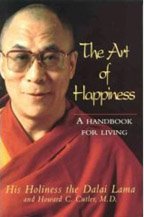
In his book The Art of Happiness His Holiness the Dalai Lama encouraged people to reach out to those that you esteme to be your enemy and befriend them. Christ encouraged us to "Bless them that curse you. Do good to those who despitefully use you". As dificult as this is to actually put into practice personally I am at a complete loss as to how to teach this principle to others and make a large scale difference in the world. My constant prayer is that I will be able to simply master this skill in my own life and my own interactions. Then hopefully the example will be felt by others.

*****

Monday, October 02, 2006

Libertarianism

A recent comment requested that I suggest a book on libertarianism. I have to confess that until that time I had never specifically read a book on Libertarianism. I've read several books on philosophy and political science as well as several books and research projects on Hobbes and Locke that helped me to form my libertarian opinions. I also subscribe to an newsletter from lp.org. I have been a "card carrying" member of the party since 2000. I've aggressively studied and defended the party platform ever since.


In an attempt to remedy my apparent lack of scholarship on the subject I read The Great Libertarian Offer by Harry Browne and What it Means to be a Libertarian by Charles Murray. If you'd like to read a well documented defense of the party platform complete with charts, graphs and extensive footnotes then read Harry Browne's book. However, I thought that Murray's personal narrative and his deliberate lack of footnotes made for a much easier to read and persuasive book. If you are new to the philosophy and you would like to know a little bit about what they believe and why they believe it then I think you would also like Murray's book. If, on the other hand, you are looking for charts and graphs to convince you then read Browne's book.

Murray considers himself a lowercase libertarian as opposed to the uppercase Libertarians. I'd never heard this distinction made but, I believe it applies to me too. In spite of the fact that I'm a card carrying member I have always been attracted more to the philosophy rather than the party. I have several issues with the strategy and motives of the party. I am also under no delusion than the Libertarians will have chance at toppling either of the established parties. I do however believe that if we are going to return to the values and philosophical goals of Jefferson, Franklin, Hobbes and Locke that it will be a return to libertarian ideas that takes us there.

Sunday, October 01, 2006

...and no one will ever convince me otherwise.


I took debate in high school and I enjoy studying logic and critical thinking. I make it a point that when I discuss politics or any other controversial topic to be very logical in my arguments and to recognize when the other side makes logical arguments.
I try to stay open minded with all of my beliefs. As I have matured many if not most of my opinions have evolved quite a bit.
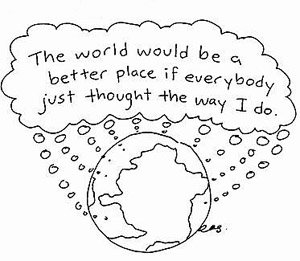
All to frequently, especially in political dialogue, I hear people say, "...and no one will ever convince me otherwise." When ever I hear this statement I know I am talking to a scared and closed minded person. An open minded person readily accepts all attempts by others to be proven wrong. Whoever would say this is essentially saying, "This is how I believe. I expect you to change you beliefs to follow suit, and don't insult me by even asking me to consider other possibilities."
What disturbs me most about this attitude is how pervasive it is. Many people who refer to themselves as Christians us this quote when discussing evolution. I'm sure Galileo and Copernicus were told similar things for defending their beliefs. These historical examples illustrate how dangerous this belief can be.
I hope that I never get this closed-minded. Even in the opinions that I hold strongest I'd like to at least be able to say, "I'm rather set in my ways on this however I invite you to try to prove me wrong."

Friday, September 15, 2006

Mortality

Until I was in my thirties I had never had a family member or a close friend die. Unfortunately, this abnormal statistic was followed by a wave of deaths both in the family and among friends. I felt like my boss was getting suspicious that I was making up all of these funerals just to get some paid time off. The result of this is that I have probably spent more time thinking about this the last five years than I ever have before, not just my own mortality but how to fill the voids left by others that were close to me.
A columnist that I read often gave the following advice about how a man that I admire is facing his own mortality. I have posted the article in it entirety sinces he share many of my beliefs.


Facing mortality can be life affirming
by Robert Kirby

When the LDS Church dedicated its latest temple in Sacramento, Calif., last week, Mormons were pleased to see our leader acting like his spry old self after his bout of recent health problems.
However, at a youth gathering in the Arco Arena, President Hinckley seemed to predict his own death by alluding to the increasing fragility that comes with old age.
"I don't know how long I'm good for and it may be the last time I'm in Northern California, but I'm here today," he said.
Mormons were suddenly abuzz with the possibility that the prophet might get "called home" in the next few days. How much longer could a man of his age last? Did he know something was up?
I'm not sure why anyone would marvel over such a revelation. President Hinckley is nearly 100 years old. He probably wants to be dead. I would if I was that old, my wife was gone, and millions of people pestered me all day long.
He didn't say he was going to die. He simply pointed out a truth that applies to all of us. Who knows from one minute to the next when death is going to crook a dry finger at them?
Granted, we expect death to come for the elderly because no one lives forever. And the older you are, the more likely it is that your time is up. Eventually you reach an age where people stop asking you what you want for dinner.
Ironically, some of the people among the thousands who heard President Hinckley ponder his own mortality last week - and maybe dozens who later read about it - had no idea that they could beat him to the other side.
Through traffic crashes, heart attacks or strokes, death may have come for a few who were wondering how much longer an old man could last. They didn't realize that their own lives were over.
None of us do. Maybe you're one of the people reading this column who won't see the end of next week or even the end of today. Heck, I might not live long enough to finish writ. . .THUNK!
Just kidding. It's not morbid to acknowledge that life is short, often far shorter than we think it is. This simple fact ought to cause us to worry more about living better than longer, but it doesn't.
Most of us act like we have an unlimited supply of tomorrows. We don't live like we were dying even though we are. We have to consciously remind ourselves that it may be the last time we're "in Northern California" or holding our kids, our telling someone that we love them.
Live like that and maybe dying won't matter as much.