Wednesday, September 13, 2006

Stewardship

I was deeply saddened by the recent and untimely death of a role model to me. Steve Irwin inspired me to reach out to my world and have a healthy respect for but, not be afraid of wild things. The conservation world has lost a giant. My kids have been watching Crocodile Hunter reruns as often as possible since we heard the news.
About once a year at church we get a lesson on stewardship. Typically the lesson turns into a lesson about missionary work and our stewardship to others. Sometimes it becomes a lesson on talents. All too often we miss the lesson on being wise stewards of the resources of our planet. Irwin showed by his example that it is vital that we protect the fragile wildlife of this world. I think that many people, particularly Christians, take the attitude that Jesus will be here soon so we don’t need to be as good a steward as we would if it were going to be a couple thousand years before he comes back. Personally, I think we should try to “get the house clean” before he comes home.
Irwin set this example for me. I will never forget the complete enthusiasm that he had over even the smallest of God’s creatures. He is one of the few people that gave nature that reverence that she deserves. As a tribute to Steve and his example I am making a conscious effort to add the work “Crikey!” into my vocabulary.

9-11-2001


I deliberately waited a few days before posting a 9/11 comment because it took me quite a while to compose my feelings about that terrible day.
The last five years have been very hard for me. It has been very hard for me to deal with all of the hate that seems to have been growing in the world. Terrorists hate us so we hate them back. Politicians and pundits justify this hate with child-like responses that just sound to me like "well he hit me first". I think the world is much more divided than it ever has been, not only internationally but domestically, and this worries me a lot. It’s been really hard for me to see our world play a game of “My God can beat up your God” while most everyone seems to be ignoring the actual teaching of their God. I have a vague recollection of being taught that we should turn the other cheek, love our enemies, and bless them that curse us. Perhaps we are just supposed to put all that stuff aside when it comes to real life and that’s just Sunday school rhetoric. By no means am I claiming that it is easy to do all of these things that we’ve been asked to do. I just see so few people even trying that it’s really discouraging.

The only light I see in all of this is that this background of hate gives better focus to those who are truly unselfish and set this hate aside to show true love for their fellow beings. The images of firemen writing their names and social security numbers on their chests with a sharpie because they know they are going to die trying to save others will always bring tears to my eyes. Here we have a great example of some people who get it. Developing this type of love is why we are all here. I have a long way to go but it is nice to see a few real role models out there for me to model my behavior.

Wednesday, September 06, 2006

Mormon Cinema

A few years ago a new genre of movies emerged. Thanks to a visionary producer named Richard Dutcher and his company, Zion Films, Mormon Cinema was created. In his mission statement for Zion Films Dutcher analyzed the religious themes in “Fiddler on the Roof”. He claimed, and I agree, that this movie was better because of the Jewish theme not in spite of it. Dutcher believed that similar movies that did not shy away from Mormon doctrine and experiences could produce equally moving tales. Since Dutcher opened the way with “God’s Army” many have followed. It saddens me to say that only a few of these movies have had any appeal at all outside the LDS community and only one has even approached Dutcher’s comparison to Fiddler on the Roof. What follows here is my review of the Mormon cinema films that I have seen in the last few years.

God’s Army
A good movie about a few relatively average missionaries and a reasonable example of missionary life. I think every returned missionary can put a real name to each of the fictional characters in this movie. I liked the theme of each missionary having to figure out why he was on a mission. A great movie for LDS members but non-members would need a translator to explain what many scenes meant and why they were important, or funny.

The Single’s Ward

A good movie that dealt with the struggles of a divorced male trying to fit back in to a community that he felt has labeled him as a reject. LDS members from
Utah will particularly enjoy the countless cameos in the film. Unfortunately the cameos, and the jokes behind them, are completely missed by many members without links to Utah. I enjoyed the film as a comic look at dating in a Utah singles Ward but I fail to see how it would appeal to non-members.

The RM
This movie was essentially Singles Ward II. Rather than exploring the challenges of a divorced member it explored the awkward steps that a returned missionary takes while attempting to adjust to post mission life. Another one that I didn’t think was a waste of time but would hardly recommend it to my non-member friends.

The Best Two Years

I thought this was a good movie. I liked it better than God’s Army. It illustrated some of the struggles that foreign missionaries go through as far a separation, relationships, companions and struggles with the language. How living the gospel can change lives was a main theme. This appears to have been filmed rather than video taped. The quality of the images and the care taken in setting up the shots really set this movie apart from all the rest. In spite of this being a pretty good film, here again the strong mission theme here would still probably only draw LDS viewers.

The Book of Mormon, The movie.
I must confess that at my wife’s behest I did not add my admission fee to this movie. I didn’t go see it. Her review was that she had seen better costumes and acting back in the 80s when they still did roadshows. I was very suspect of this when I read on the film’s website during the casting process that they were looking for a Nephi that looked like the Arnold Freeburg paintings. They didn’t care if he could act and they would consider dubbing his voice if he looked a lot like the Freeburg Nephi.

Brigham City
So far this is unquestionably the best of the genre. The themes of everybody having skeletons in their closets and the conflicted Bishop who is also the sheriff dealing with separation of church and state issues. A great movie about casting aside stereotypes and learning to forgive. I would recommend this to anybody. The sad part about this movie is that the strong murder mystery main story gave it a PG-13 rating. This rating scared away much of the core LDS audience. I think this movie would have done much better if it had been shown outside of Utah. Ironically the picture that came closest to Dutcher’s own “Fiddler on the Roof” standard was panned by his most loyal audience over the rating.

Saints and Soldiers

I don’t care for war movies. However this one was very different. It will challenge your concept of how you define someone as a friend or an enemy. I’d like to see more LDS films explore these types of serious themes.

Work and the Glory

My wife read the books by Gerald Lund that this movie series is based on. From her reports they seem to be faithful to the books. The first movie is well done but it never quite escapes the ABC miniseries soap opera feel. I like the historical fiction about a fictitious family with the Joseph Smith story as a background support. Done right as they did with Ben-Hur, this strategy can be a great way to tell both the fiction story and the real history behind it. I think they’re headed in the right direction with these films and I look forward to seeing them all.

Baptist at Our Barbeque
Done right this movie could have had a great out reach to non-members. The concept of two conflicting communities trying to get along in the same town lead to a lot of issues about who is truly our neighbor. Unfortunately, they resorted to slapstick and jokes and avoided the more serious issues that could have been dealt with in a film with this title. It was entertaining but hardly high-cinema.

The Home Teachers
Another skinny guy and fat guy slapstick road trip movie. Not much distinguished this movie from Tommy Boy. The fat guy even looked like Chris Farley. Knocking a corpse out of a coffin at a funeral, a toilet falling through the ceiling, hich-hiking after they destroyed the car, etc. etc, ad nauseam. The last 10 minutes of the movie they tried to pull it out of the gutter by finally understanding why they were home teaching in the first place. I’m sorry, but it was too little too late for me to give this a thumbs up.

Mobsters and Mormons
This was a cute movie. The acting was good and there were some good morality issues covered, also a few valuable lessons about judging others. As much as I enjoyed this it was still just like an LDS version of For Richer or Poorer. Again we have a movie that makes jokes about LDS culture without even approaching any doctrine. There are jokes about coke, scrapbooking, etc but nothing too deep. The saving grace for this movie was the last few minutes when the mobsters explain how they were taken in by some folks who truly treated them like neighbors. Watch it. It’s fun.

Suits on the Loose

This is a story about two young convicts who escape from a work camp and end up hiding within the Church as missionaries. Personally I though Nuns on the Run was much funnier and had almost exactly the same theme.

Sons of Provo
A tounge in cheek look at a Mormon "boy band". The soundtrack is hilarious but that's its only saving grace. Like many others this movie seems to targeted souly to LDS members.

I have yet to see States of Grace. The reviews have been very good and I have high hopes for it. I’ll post a review once I’ve seen it.

I also haven’t seen Church Ball or Take a Chance yet. They look reasonably entertaining but I’m not holding my breath that either with approach the “Fiddler on the Roof” standard.

I think the saddest thing here is that there is no impetus for these films to get better. The core market, LDS members, buys these mediocre movies as if they were canonized. If the members keep this up the quality of the movies has no reason to improve. Just because it isn’t a “bad movie” i.e. rated R, doesn’t necessarily mean it’s a good movie. Only a couple of them have the doctrine as a central theme. Most are mearly about the LDS culture outside of the doctrine. As these films’ core audience we should coax them in the right direction. I would encourage members to continue viewing these movies but to be more selective and objective. If we don’t hold the genre to higher standards than we have been they will never get any better. Although most have been entertaining nothing I have seen in any of these films has grabbed me with the intensity of Tevye singing the line, “Then I suppose I love you too.” Keep trying. I’ll keep watching.
Friday, September 01, 2006

Science v. Religion


This has been a common theme for me but recent events have made me think about it again. Last night I picked up a book and started reading A Jealous God: Science’s Crusade Against Religion. I didn’t even make it through the introduction before I became convinced that this is just another one of the many books written by Christian conservatives that attempt to paint scientists as immoral and godless. If that is not the case then I apologize to the author. I would recommend that she not set that tone if she expects anyone other than someone who already believes her way to read it.
I get to work early so I can read the news on a couple of my favorite sites before the rest of the crew shows up. While reading I learned that The Catholic Church has fired its head astronomer for speaking out against Intelligent Design. Claiming that it wasn’t based on science, which I agree, Father Coyne was concerned that trying to link God with this theory was demeaning to God.
In my review of How We Believe I explained how Michael Shermer believes that people are in one of three different stages in their relationships with God and science. First, they believe that the two are in conflict. Second, they believe that the two are harmonious. And third, they believe that the two exist in completely different spheres. From what I have read it appears that Coyne was in stage two or three and he was fired by a Vatican firmly entrenched at stage one. In spite of some of the steps that the Vatican has taken in the last century to make amends with science, I see this as a huge step backward.
I just do not understand why religion is so afraid of science. Contrary to books like Godless and A Jealous God I do not believe that science has the same animosity towards god. Granted there are exceptions, however for the most part I think scientists just treat religion as being irrelevant to their work. Science is based on physical laws and testability. Basically they take a logical positivist philosophy. Basically that if it isn't physically real then it isn't testable and is not the domain of science. Since they refuse to place an ultimate value judgment on it religion takes offense. I believe this offense is needless and irrational. From personal experience I can say that there came a tremendous peace both to my spirit and my intellect when I stopped trying to make the two worlds harmonize. When, if ever, will religion as a whole learn this lesson?

Sunday, August 27, 2006

Dating Strategy

Just for the record: I am not in the dating market and I haven’t been for 17 years. Nor do I plan to be in the dating market again for the rest of my life. Some recent events have got me pondering single life in the 21st Century.
With all of the weirdness out there I can only imagine how hard it would be for a girl to find a decent guy to date. The whole concept of picking up guys in bars just seems to me like just sifting through the garbage to find the best groceries. Wouldn’t it be neat to go somewhere to find some guys who where nice, compassionate, healthy, clean and not gay. You’d almost want to have a questionnaire of some sort to see if the guy you were interested in was even worth further consideration. Well wouldn’t it be great if you could get somebody else to ask those embarrassing questions for you and sort of rubber stamp which guys passed so you didn’t have to waste any time with the rest? This is exactly what I think happened to me last Thursday.

At least once a month I donate platelets at the Red Cross in a process called aphaeresis. I’ve been doing this for years but it has taken a special importance to me since my niece and a good friend of my son’s had been diagnosed with cancers. Before you are allowed to donate they take you into a small room and ask about 30 questions to try to determine how clean your blood is. “Have you ever, even once, had $3x with a woman who has taken drugs with a needle?” This is one of the more tame questions. Suffice it to say that if the nurses allow you anywhere near the tables then you are clean, you are not a drug user, you have no body piercings, no dirty tattoos, you are charitable and not gay. At this point I was officially rubber stamped. So when the other donor came in and saw me already with the needles in my arm donating she just had to make the judgment of whether or not she thought I was cute.
After we’d both finished donating she dropped a few subtle hints that she was interested. It was only after we were in the elevator that she realized her one flaw in her dating strategy. The nurses did not prescreen the married guys. They put blankets on us while were donating so we don’t get too cold and frequently our hands are covered, so she wouldn’t have been able to see my ring. Perhaps we should let the nurses in on this little flaw so they can put the single guys on one side of the room and the happily married guy on the other. Just add it to the questions that they already ask us.
So to the cute, early twenties, brunette who gave platelets last Thurday. Good luck on your search. I hope you find a nice charitable guy who is clean, not gay and also not already married. I admire your strategy and I’m sure it’ll work better than bar hopping.

After relating this story to my wife she decided to blog it too. Here is her version.

Tuesday, August 22, 2006

Inbox Myths

With the advent of email the world became much more in touch. Information that a decade ago would have taken days to cross the planet now only takes a few bulk emails. For the most part this is a very good thing. However, along with this benefit comes the redheaded step child of email, the completely unresearched mass forwarded urban legend.

Do any of these sound familiar? Oliver North was afraid of Osama bin Laden back in the 80s. Mars is closer than it has been in centuries. Fred Rogers and Captain Kangaroo were decorated war heroes. The 9-11 flights were picked because of their graphic significance if you change the font to wingdings in Word. If they don’t then you may be the only person on the planet who has not been in the loop on the latest email legends.

I’m consistently amazed at how otherwise sensible, rational people will believe and forward on anything that shows up in their inbox. A few years ago I just used to erase these little annoyances as soon as I saw them. But for the last couple of years I’ve felt this need to research the data and forward the correct information to everybody on the lists. I frequent several websites that research these legends. I also subscribe to an email newsletter from factcheck.org that unbiasedly verifies political claims. I’ve heard it repeated in the political arena that “a lie unchallenged becomes the truth in 24 hours”. Perhaps it is this desire to set the record straight that motivates me.

I’ve had a few people criticize my actions by assuming that I was taking a political position on the email one way or the other. If I state that an email critical of Democrats is not factual that does not mean that I support the Democrats. If I show sources that Fred Rogers was never in the Marine Corp that does not mean that I think any less of Mr. Rogers or the Marine Corp. More often than not the position that I am taking is simply, this is not a fact and I will not use it justify my opinions one way or the other. Many times the facts I uncover go against my personal beliefs and desires. I mean I would love if Mars was going to appear as big as the moon next month but the truth is it just isn’t gonna happen. I just want to make sure that if I take any actions or form any opinions based on these emails that they are based on fact.

I guess my only point here is to say don’t trust everything you see in your inbox. And if you want to find out if something is true or not just send the email and I’ll do my best to ferret out the truth.

Tuesday, August 15, 2006

Voodoo Science


I just finished reading the latest in my series of books exploring the complicated mix of science, theology, and politics. Voodoo Science: The Road from Foolishness to Fraud by Robert Park. There are lots of silly pseudoscience claims out there and Robert Park addresses many of the most common ideas. Topics ranged from homeopathy and perpetual motion machines to EMF causing cancer and US military skunk works.

Without throwing so much science into the discussion that he would bore anybody but a physicist, Parks is clearly able to explain why the claims of homeopathy are impossible to prove either true or false. He follows the same path with many other pseudoscience claims such as cold fusion and gravity shields. If for this alone the book would have been well worth my time.

Park goes one step further. He explains, as he calls it in his subtitle, the road from foolishness to fraud. He believes that most proponents of these pseudoscience claims start out with good intentions but not necessarily with the most careful science to support it. After multiple attempts to gain credibility and validate their claims at some point he believes they realize their mistake and either choose to own up to it and take a few lumps or to continue on knowing that they are perpetuating a fraud. Personally I believe that most of the new age medicine claims like acupuncture, homeopathy, and reiki fall into this category. I believe that at one point most of the practitioners believed what they were peddling. They then chose to either ignore the mountain of evidence against it and continue in their self deception or accept the evidence but keep selling their craft as if it is science. Either way they are deceiving someone, if only themselves.

The big surprise to me in this book was his attack on the manned space flight program. I’ve always believed that Mercury, Gemini, Apollo, the shuttle and the ISS were first and foremost political adventures rather than scientific expeditions. Park analyses all of the scientific gains we have achieved from manned space flight and concludes that there is not one single scientific discovery that could not have been made cheaper and exponentially safer by sending unmanned probes. Park admits that the science behind manned space flight is real and therefore should not be classified as “voodoo” however due to the manipulation of science by politicians and the ultimate uselessness of manned space flight he chose to include it in this book. Having always been a fan of manned space flight this chapter was particularly eye opening.
I really enjoyed reading this. Because it challenged my beliefs in certain areas I will remember it longer than books that simply confirm what I've already believed.

Monday, August 14, 2006

Confirmation Bias

In the past few years I have taken several philosophy and critical thinking courses and read many books on the subjects. I also spend a fair amount of time reading the interaction of politics, theology and science. Time and time again I see in my reading and in my life experiences that one of the biggest critical thinking errors that people make is that of confirmation bias. That is when you accept the evidence that supports your beliefs and you disregard the evidence that contradicts your beliefs. For instance, if I believed that lottery numbers had some cosmic significance then it would confirm my belief to know that on September 11th, 2001 the winning numbers on the New York lottery was 9-1-1. But in order to accept that I need to reject the thousand of other events that do not confirm my numerologist beliefs. What were the number in Oklahoma when the federal building was bombed? How about the numbers during the first attack on the WTC? etc. etc.

To ease you minds a little I am not a numerologist. However, I have been very guilty in the past of confirmation bias. When a scientific breakthrough would prove certain dietary claims that went hand in hand with the Word of Wisdom I would accept those claims to justify my faith in the Word of Wisdom. In the process however, I would also have to reject certain other evidences like the studies that shows that a glass of wine each day can have a positive effect on your health. I enjoyed following the expeditions of Thor Hyerdal who built reed boats and sailed them from Africa to South America. They tended to support the idea that Lehi’s voyage was possible. But to accept this evidence it also meant that I had to ignore the mountain of evidence in South America that shows no link at all to the ancient middle-east.

Many scientists refer to the brain as a belief engine. It takes input from our senses and then turns that input into beliefs that will help us predict and cope with our chaotic world. When we see one event that follows another our “belief engine” makes a connection. The more often that sequence of events is seen then the more solidly that connection is made. By seeing crops grow after planting seeds and watering them you teach your brain that watering seeds causes crops to grow. The problem our brain has is that just because there is a correlation that does not mean there is necessarily a cause and effect relationship. If we continue to believe that this correlation is a cause and effect relationship we end up with weird beliefs like lucky bowling shirts and other illogical beliefs.

Looking at my own decision with a critical eye has helped me a lot. It has forced me to stop wasting effort on paths that will only lead to disappointment and it has helped me to focus on the aspects of my life that really make a difference. No longer am I wasting time trying to figure out why my lucky bowling shirt is lucky. I have just accepted that it isn’t and my game has improved. By no means am I claiming that I have eliminated confirmation bias. However, being consciously aware of why I choose to accept certain beliefs has really helped me to reach a mental peace and make sense of my surroundings.


Just for the record, the “lucky bowling shirt” is a metaphor for other events in my life. I bowl about once a month and I don’t remember which shirt I had on any of those times. I rarely bowl over 100 even with the kiddy bumpers up so I don’t think I could call any of those shirts lucky. :)

Monday, August 07, 2006

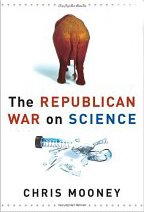
The Republican War on Science


I recently finished reading another book that falls into the Coke v. Pepsi genre that I described last week. This in my review of The Republican War on Science by Chris Mooney

Like nearly all political books you have to take into account the bias of the author when reading. Even with this in mind Chris Mooney does a very good job at explaining the flawed science that influences public policy. He touches on the abuses of science by liberals and personally I think it would have been a better book if he had shown a little more introspection into these events to add to his credibility. In spite of this Mooney shows issue by issue how the Republicans exaggerate uncertainty on well established science like evolution and then ignore the same rules they used to tear down one theory as they present their own counter theory that has even more uncertainty and is less established. He also fully documents several instances of paralyzing any action by simply regulating it to the point that no action is possible.
In many ways this book is much more eloquent at expressing my opinions about the relationship between science and politics. If you think something is a good policy for social, moral or even religious reasons then have the courage to say that. For instance; It is possible to agree that burning fossil fuels is contributing to greenhouse gases and still think that any policy change is premature. Even if I disagree, I can accept that policy. There is no need to exaggerate and try to debunk well established climate science in order to make your argument seem stronger. If you think that abortion is immoral then base your policy decisions on that alone. Don’t attempt to back up your policy decisions by exaggerating the potential of the existing stem cells in laboratories.
This is Mooney’s first book and a lot of it was rather tedious. However, I would recommend it to any scientist or to anyone who believes that logic and reason should have a place in political policy.

Tuesday, August 01, 2006

Coke v. Pepsi

I read a lot of nonfiction books. In particular I enjoy science books, theology and politics books.
I enjoy reading books on both sides of the coin. I like to hear the opinions of both sides so I can make up my mind for myself. I have grown up a member of "The Church of Jesus Christ of Latter-Day Saints" and I enjoy reading books on LDS history and theology. In contrast I also read what many members would call anti-mormon books.
I grew up Democrat and have since progressed towards the Libertarian party. I enjoy reading right-wing and left-wing books because I share many views of each.
In the science arena I also enjoy reading books that challenge my religeous views.
I find that many of these books fall into the category of telling what is wrong with the other side.
Although I understand their perspective I think that all too often their focus is not on what is right about their own argument. Sometimes I feel like I am watching a series of commercials. The first one tells me that Pepsi is better than Coke. The next one tells me that Burger King is better than McDonalds. Having taking many debate and logic classes and having a personal affinity for logic based arguments I think there are many flaws to this logic. Just because Pepsi says it tastes better than Coke does not mean that drinking caffienated sugar water is healthy. Just because Burger King tastes better than McDonald's doesn't make fast food good for you either. The same also flows for the books that I've read. Just because Ann Coulter can point out several flaws in the liberal agenda does not say anything at all about the valitity of the conservative agenda. Just because science can't prove that God exists does not mean that atheism is a healthy and good way to live.
I would like to find a few good books out there that focus on just what they have to offer rather than spending most of their pages pointing fingers at the other guys.